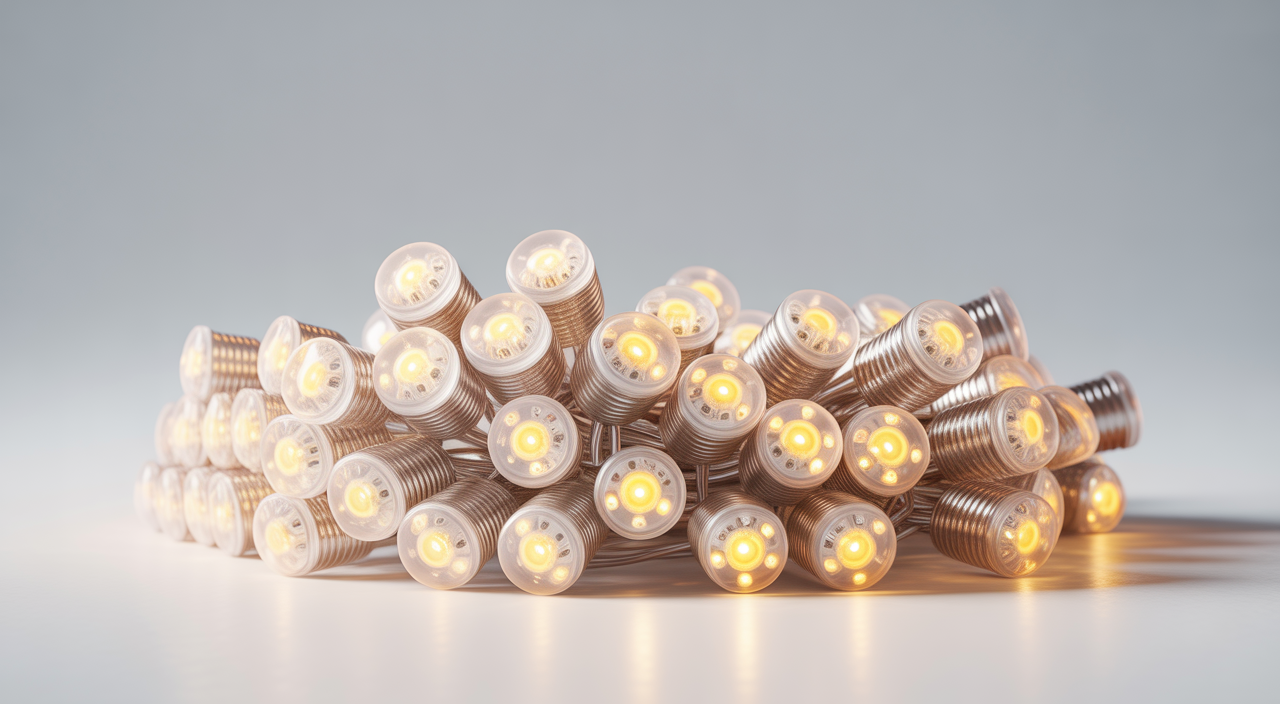
Planning a DIY project and wondering how these tiny lights actually work? This guide walks you through what mini led lights are, how to power them safely, and how to pick the right ones for long‑lasting, bright results.
We will keep things simple and practical. You will learn the key specs like voltage and current, how to calculate a basic resistor, and where small LED lights make the most sense, from models to décor and small signage.
By the end, you will be ready to plan your own lighting setup with confidence, instead of guessing and hoping it works.
What Are Mini LED Lights?
Mini LED lights are tiny LED bulbs, often just a few millimeters in size. They are also called miniature LED diodes or discrete LED components. Each little piece is a single light source that runs on low voltage, often around 2 to 3 volts.
They are different from LED strips, which are long flexible bands with many LEDs already wired together. With discrete LED mini lights, you control how many to use, how to connect them, and where to place each one.
You may also hear terms like “micro LED” in tech news. Micro LEDs are even smaller and are used mainly in advanced display panels. For most hobby, décor, and model projects, standard mini LEDs are perfect and much easier to work with.
Key Technical Specs You Should Know
Before you buy or wire any tiny LED bulbs, it helps to understand three basic terms: forward voltage, forward current, and viewing angle.
Forward Voltage
Forward voltage is the voltage drop across one LED when it is on. Many red, yellow, and green LEDs use around 2 volts. White and blue LEDs often use about 3 volts. That is why you see 3V LED diodes so often in product listings.
If your power supply is higher than the LED’s forward voltage, you must use a resistor to limit the current. This small step protects the LED from burning out.
Forward Current and Brightness
Forward current is usually listed in milliamps (mA). Common mini LEDs run at 10 mA to 20 mA. More current usually means more brightness, but also more heat and shorter life if you go beyond the rated value.
For most hobby and décor uses, 10 mA to 15 mA is bright enough. It also makes your LEDs last much longer, which is great for long‑term model lighting or small business displays.
Viewing Angle and Color
Viewing angle tells you how wide the light spreads. A narrow angle gives a tight, focused beam, useful for spot effects in models. A wider angle fills a larger area, useful for mini LED Christmas lights, backlighting, or gentle accent lighting.
Color options range from warm white to cool white, plus red, green, blue, and more. Warm white suits cozy indoor décor, while cool white works well for modern displays or work lighting.
Popular Uses for Mini LED Lights
Miniature LEDs are incredibly flexible. Here are some common ways people use them.
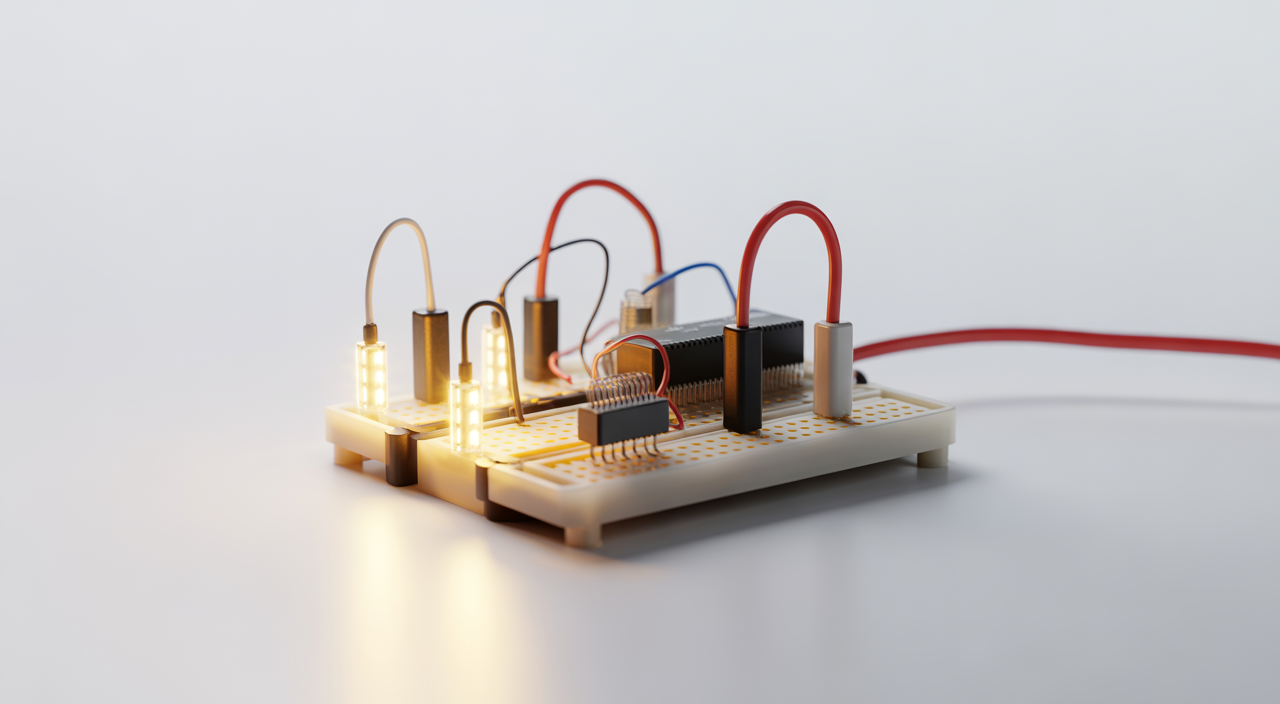
- Electronics hobby projects: Status indicators on small circuits, breadboard prototypes, or tiny control panels.
- Home décor: Accent lighting inside shelves, picture frames, wall art, or custom photo boxes.
- Models and crafts: Model trains, aircraft, cars, building windows, and scaled streetlights.
- Small signage: Backlighting for letters or logos at shops and kiosks.
Because they are low‑voltage LEDs, they are safer and more energy efficient than traditional bulbs, especially for long‑running displays.
How to Choose the Right Mini LED Lights
A few smart choices at the start will save you time and rework later.
Match Voltage and Current
First, know your power source. Common options are 3 V (two AA cells), 5 V (USB power bank), or 12 V adapters. Then pick mini LED lights whose forward voltage fits nicely with that supply.
For example, 3 V LEDs pair very well with small battery packs used in handheld projects. Check the rated current (mA) and design your circuit so each LED stays at or below that rating.
Use a Simple Resistor Rule
To find a safe resistor value, you can use this simple formula:
Resistor (ohms) = (Supply voltage − LED voltage) ÷ LED current
Example for a single 3 V LED on a 5 V supply at 15 mA:
- Supply voltage = 5 V
- LED voltage = 3 V
- LED current = 0.015 A
Resistor = (5 − 3) ÷ 0.015 ≈ 133 ohms. You can choose the nearest common value, like 150 ohms, to run it a bit cooler and extend its life.
Check Durability and Protection
If you plan outdoor or humid installations, look for LEDs with some protective coating and a suitable IP (Ingress Protection) rating. Indoor projects like media walls, shelves, or decorative panels do not need high IP ratings but do benefit from good soldering and wire management.
For more inspiration on stylish home installs, you may like this guide to designing a modern media wall, which pairs beautifully with discreet LED lighting.
Basic Wiring Guide for Mini LED Lights
You can wire LED mini lights in two simple ways: on a breadboard or by soldering permanent connections.
- Gather tools: LEDs, resistors, a low‑voltage power supply, small wires, and if soldering, a soldering iron and solder.
- Identify LED legs: The longer leg is usually positive (anode), the shorter leg is negative (cathode).
- Connect with resistor: Place the resistor in series with the LED between the positive side of the power source and the LED’s anode.
- Test with low power: Start with batteries or a current‑limited supply to confirm brightness and wiring.
Breadboards are great for quick tests. Once the layout looks good, you can solder the final version for long‑term use.
DIY Project Ideas for Mini LEDs
Here are a few simple but impressive projects to try.
- Mini LED desk lamp: Use a small wooden base, a thin metal arm, and a cluster of white LEDs at the top. Power it from a USB source with proper resistors.
- Light‑up picture frame: Place warm white LEDs along the inner edge of a photo frame to create a glowing border.
- Model car headlights: Drill tiny holes for LEDs in a scale model car and wire them to a hidden battery pack in the base.
Such projects are perfect weekend activities for students, families, or anyone getting into electronics.
Troubleshooting Common LED Issues
If something looks off, it is usually easy to fix.
- Flickering: Often caused by loose wires or an unstable power source. Check connections and try a fresh battery.
- Getting hot: The resistor value may be too low, causing high current. Move to a higher‑value resistor.
- Uneven brightness in groups: When wiring several LEDs, try giving each LED its own resistor so they all share current evenly.
With a bit of patience, most problems are solved by rechecking polarity, resistor values, and connections.
Where to Buy Quality Mini LED Lights
When choosing mini LEDs, focus on clear specifications, consistent color, and reliable build quality. This is especially important for long‑running décor, store displays, or event setups where replacing parts is not convenient.
If you enjoy building or upgrading your space, you may also like reading about modern home interior design, which pairs very well with subtle, well‑placed lighting.
FAQs About Mini LED Lights
Q1. Can I power a 3 V LED with a 5 V supply?
Yes, but only with a resistor in series to limit the current. Use the formula (5 V − 3 V) ÷ desired current to find the resistor value. For many projects, a 150‑ohm resistor works well for a single 3 V LED on 5 V at a comfortable brightness.
Q2. How do I connect multiple LEDs in one project?
The safest method is to connect LEDs in parallel, with a separate resistor for each LED. This way, each light gets the right current and stays evenly bright. Series wiring is also possible in some cases, but you must add up their forward voltages and design the resistor carefully.
Q3. Are mini LED lights suitable for battery‑powered projects?
Yes. Their low power draw makes them perfect for battery use. Just match your LED voltage to your battery pack, use the correct resistor, and your lights can run for many hours without draining the battery too quickly.

Mark Martin is a freelance writer and editor based in New York City. He has written extensively on topics ranging from technology, business and lifestyle. His work has been featured in major publications such as The New York Times, The Wall Street Journal and Wired Magazine.

